


17 June 2024
By Dr. Ketut Jaman
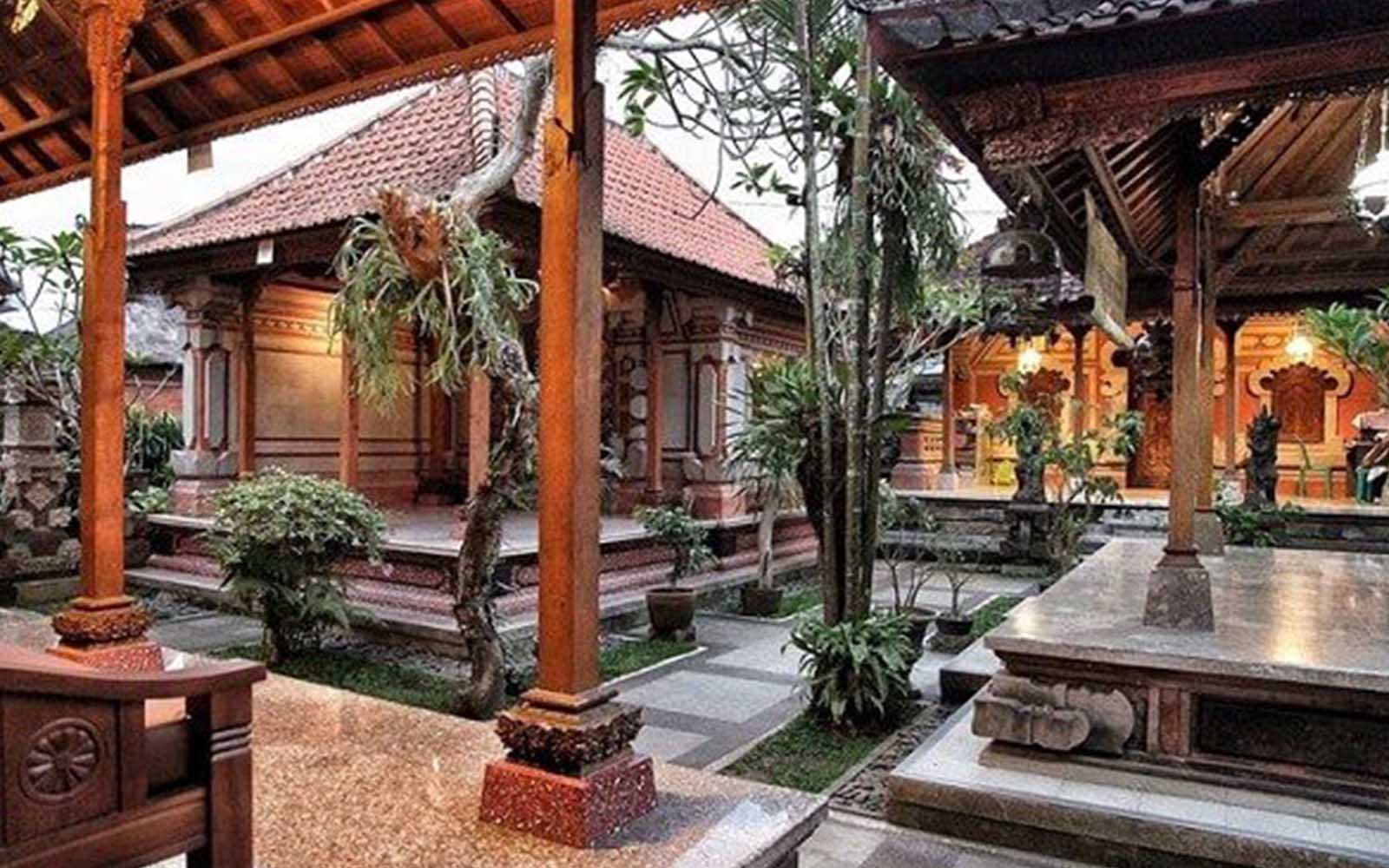
I used to be a tour guide, escorting visitors from various countries to visit tourist attractions such as temples and rural areas in Bali. Many of them are interested in learning about the architectural structures inside temples as well as in family compound yards. As a tour guide working for a destination management company in Bali, I must be able to explain the concept of traditional Balinese architecture to the foreigners I accompany.
Traditional Balinese architecture is the product of human intellect, with its implementation based on views of the universe, attitudes towards life, norms, religion (Hinduism), beliefs, and past culture. Settlement patterns, temple buildings (Pura), and residential courtyards are constructed based on the Asta Kosala-Kosali palm leaf manuscript. Traditional Balinese architecture encompasses several fundamental concepts that influence its spatial values. These concepts include:
In addition to these concepts, there are also three axes used as guidelines for building arrangement in Bali.
Balinese traditional houses, as embodiments of a strong culture, are rooted in philosophy stemming from Hinduism, which teaches humans to harmonize the universe with all its contents, including the macrocosm (bhuana agung) with the microcosm (bhuana alit). In this context, bhuana agung represents the built environment or structures, while bhuana alit represents the humans who establish and utilize these structures. The realization of the cosmic arrangement from the most macro (the universe) to the most micro (humans) is grounded in the concept of Tri Hita Karana. In the universe, the soul is paramatma (the Supreme God), energy is various natural forces, and the body is Panca Maha Bhuta, the five basic elements of the universe comprising pertiwi (earth), apah (water), bayu (air), teja (fire), and akasa or ether (space). In settlements, the soul is parhyangan (village temples), energy is pawongan (society), and the body is palemahan (village territory). In residential homes, the soul is sanggah or pemerajan (sacred places), energy is the inhabitants, and the body is the courtyard. As for humans, the soul is atman, energy is sabda bayu idep, and the body is stula sarira (the human body).
In the next articles, I will write about the concept of Tri Hita Karana, which serves as a life philosophy for the Balinese community, and its relationship with Balinese traditional architecture. Even though many Balinese people currently work in the tourism industry as incentive planners, tour planners, event planners, meeting organizers, or event organizers, they still firmly adhere to the concept of Tri Hita Karana in their daily lives. Tri Hita Karana, which governs the harmony between humans and the environment, is structured within the framework of the body (angga) and gives rise to the spatial concept called Tri Angga (three physical values), namely: Utama Angga, Madya Angga, and Nista Angga.
Bibliography:
Sudiarta, I Nyoman. 2016. RUMAH TRADISIONAL BALI (TRADITIONAL BALINESE HOUSES). Department of Architecture Engineering, Faculty of Engineering, Udayana University.