


22 August 2024
By Dr. Ketut Jaman
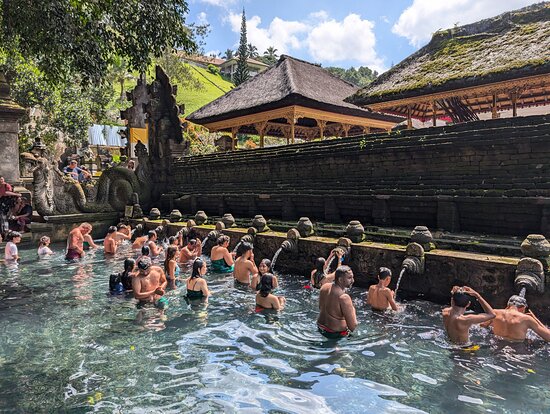
"Desa Adat" refers to a customary village in Bali, Indonesia, that operates based on local customs, laws, and rituals passed down through generations. These villages are integral to Balinese culture and are governed by awig-awig (traditional laws) and perarem (regulations) that maintain social order and religious practices. The customary village functions as a community where cultural heritage, spiritual ceremonies, and communal responsibilities are preserved and carried out according to Balinese traditions. This article will outline the profile of Desa Adat Manukaya Let, covering aspects such as geography, demographics, technological systems, livelihoods, social organization, knowledge systems, arts, religion and belief systems, village regulations, and the village's financial system. The information in this article is based on research I conducted in Desa Adat Manukaya Let during 2021-2022 using interview, observation, and literature study methods.
The first part of this article addresses the Geography, Demographics, and Technology System of Manukaya Let Customary Village
1. Geography of Manukaya Let Customary Village
Manukaya Let Customary Village is one of the ten customary villages in the Manukaya Village/Kelurahan area, Tampaksiring. Before the village was divided, the territory of Manukaya Let Customary Village was extensive, covering the areas where Tirta Empul Temple, Dalem Pingit Temple, and the Presidential Palace of the Republic of Indonesia are located. After the village was split, part of the territory of Manukaya Let Customary Village became Manukaya Anyar Customary Village and Sareseda Customary Village, which is one of the banjar in Tampaksiring Village. If you look at the map of the area, it is clear that Tirta Empul Temple and Dalem Pingit Temple are now located within the Manukaya Anyar Customary Village, even though both temples remain the property of Manukaya Let Customary Village.
Manukaya Let Customary Village consists of three banjar: Banjar Bantas, Banjar Manukaya Let, and Banjar Tatag. Geographically, Banjar Bantas has the largest area, followed by Banjar Manukaya Let and Banjar Tatag. The territory of Manukaya Let Customary Village stretches from south to north. The boundaries of this customary village are as follows: to the north is Banjar Penempahan, to the east are Banjar Basangambu and Banjar Manukaya Anyar, to the south is Banjar Sareseda, Tampaksiring, and to the west are Banjar Calo, Pupuan, and Tegallalang.
All the land in this area is highly productive. In terms of its use, the largest portion of the land, about 60% of the total area, is dedicated to rice fields. Around 20% is used for dryland farming, and the largest protected forest area, about 10%, is located around Gumang Temple. The remaining 10% is allocated for residential areas, public facilities, places of worship, sports facilities, and elementary schools (Interview with Wayan Superdana, February 26, 2021).
According to the customary village regulations perarem, local residents are not allowed to sell land to buyers from outside Manukaya Let Customary Village. The purpose is to preserve ancestral heritage and prevent land-use changes. If a resident is forced to sell their land to an outsider, they are required to pay a substantial portion of the sale proceeds to the customary village.
Manukaya Let Customary Village is located at an altitude of 600–700 meters above sea level. The village has many perennial crops, such as coconut, cloves, vanilla, palm, and candlenut. The local residents also cultivate a variety of horticultural crops, including avocado, starfruit, lanzones, durian, water apple, guava, and jengkol. Other crops include large oranges, tangerines, mangoes, mangosteen, passionfruit, jackfruit, pineapple, papaya, banana, rambutan, snake fruit, and soursop.
2. Demographics of Manukaya Let Customary Village
In 2019, the population krama of Manukaya Let Customary Village was approximately 1,924 people. The krama residing in Banjar Bantas numbered 569, consisting of 285 men and 284 women; in Banjar Manukaya Let, there were 655 krama, consisting of 337 men and 318 women; and the remaining 700 krama lived in Banjar Tatag, consisting of 385 men and 315 women.
Generally, the residents krama of Manukaya Let Customary Village are literate, although not many continue their education to the university level. There is only one elementary school in Manukaya Let Customary Village. If residents wish to continue their education to junior high school (SMP) or high school (SMA), they must attend school in another village. Most of the krama of Manukaya Let Customary Village have completed their education, whether it be junior high school or high school. The villagers are very obedient to the awig-awig and perarem (village regulations) that have been agreed upon by the krama of the customary village. Traditional customs, especially those related to ritual ceremonies, are carried out with reverence and passed down from generation to generation. The villagers are strongly attached to the traditions practiced in the customary village.
In this customary village, there is a perarem that requires any resident who is able to build a house on a new plot of land and has a bale dangin (a type of traditional Balinese pavilion) to become a member of the customary village. In addition to the 108 core village members krama desa uwedan, there are also 41 other members of the customary village. These are the krama desa lanang who have built houses outside the 108 plots of the krama desa uwedan. It is very rare for residents to want to establish residences outside the customary village area, and even those who live in big cities like Denpasar can be counted on one hand.
3. Technology System in Manukaya Let Customary Village
In terms of technology usage, the residents of Manukaya Let Customary Village are quite advanced. Almost every family owns a motorcycle and a mobile phone. Some residents even own four-wheeled vehicles.
Even those who work in the fields and rice paddies communicate using mobile phones. The Manukaya Let banjar hall provides internet access (Wi-Fi), so it's no surprise that many teenagers come to the banjar hall to access free Wi-Fi. Several households also have internet (Wi-Fi) connections, for which they pay around IDR 300,000 per month.
To cultivate rice paddies and dry farmland, the local community no longer uses traditional tools like oxen, as they did in the 1980s. Instead, they use tractors to work the fields. There are only 5-6 tractors available in Manukaya Let Customary Village, and these are owned by others and rented out to local residents.
Residents of Manukaya Let Customary Village do not have difficulty accessing water for household needs, as they have a self-managed water system that is not part of the regional water utility (PDAM). This water comes from springs within the Tirta Empul Temple complex and from springs around Suradayu Temple. The monthly fee for each household to access water is about IDR 25,000. Water for the rice paddies is abundant, which explains why the rice paddies in Manukaya Let Customary Village are more extensive than the dry farmland.
The customary village owns a considerable amount of land laba pura. All laba pura land is cultivated by the prajuru families, and 50% of the yield is given to the customary village. Each prajuru is allotted 40 are (0.4 hectares) of rice paddy and 28 are (0.28 hectares) of dry farmland. There are 27 prajuru in Manukaya Let Village. Therefore, the customary village owns 10.8 hectares of rice paddies and 7.6 hectares of dry farmland, plus 24 hectares of rice paddies located outside the Tampaksiring area, in Payangan Village, Gianyar Regency.